Career Paths for Professional Musicians Outside Academia (2026 Guide)
Expanding Professional Possibilities in a Changing Musical Economy
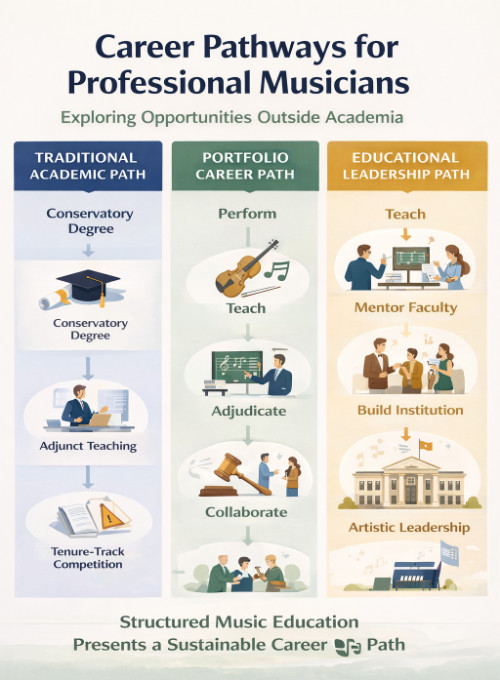
For much of the twentieth century, conservatory training implicitly pointed toward a narrow set of career outcomes: orchestral performance, university teaching, or a combination of adjunct teaching and freelance artistic work.
Today, the professional landscape has evolved. While advanced degrees in music performance remain widely pursued, the number of qualified graduates continues to exceed the number of available tenure-track academic positions. As a result, many highly trained musicians are exploring alternative career models that preserve artistic engagement while offering greater long-term stability. The truth is that there are rewarding career paths for professional musicians outside academia.
The good news is that the broader music education sector has expanded significantly, creating new pathways that allow musicians to remain deeply connected to their discipline while exercising greater professional autonomy.
Increasingly, musicians are discovering that careers outside academia can offer not only sustainability, but also meaningful artistic influence and leadership opportunities.
Structural Changes Influencing Music Careers
Several long-term developments have reshaped professional options for musicians.
Growth of the Private Music Education Sector
Private music instruction has experienced steady global growth, driven by parental interest in structured enrichment activities that promote cognitive development, discipline, and creativity.
Music schools now serve broader roles within their communities, often functioning as hubs for:
- artistic mentorship
- performance opportunities
- collaborative learning
- early pre-professional training
- lifelong music appreciation
As educational demand increases, professional teaching environments have become more structured and more collaborative.
Expansion of Hybrid Teaching Opportunities
Digital technologies have broadened access to specialized instruction and expanded the geographic reach of teachers.
Musicians now frequently combine:
- in-person teaching
- remote instruction
- masterclass presentations
- digital educational content
- collaborative projects across regions
Hybrid teaching models allow educators to diversify activities while maintaining strong artistic connections.
Increasing Preference for Structured Educational Environments
Students and families increasingly seek institutions offering:
- consistent pedagogical frameworks
- performance opportunities
- structured curriculum progression
- technical benchmarks
- mentorship from experienced educators
As a result, professionally organized music schools have gained prominence as stable educational environments.
Such institutions allow teachers to collaborate within shared artistic standards while benefiting from administrative infrastructure.
Common Career Models for Musicians Outside Academia
Professional musicians frequently pursue portfolio careers combining multiple complementary activities.
Independent Private Studio Instructor
Operating an independent studio allows flexibility but often requires significant time devoted to scheduling, billing, marketing, and student retention.
While many musicians find this path rewarding, administrative responsibilities can reduce available time for artistic development.
Performer-Educator
Combining performance and teaching remains one of the most common career models.
Activities may include:
- solo recitals
- chamber music collaboration
- accompanying
- festival participation
- adjudication
Teaching provides stability between performance engagements and allows musicians to influence the next generation of artists.
Collaborative Artist or Specialist Coach
Collaborative pianists, vocal coaches, and chamber musicians often develop specialized roles supporting other artists in both educational and professional contexts.
These musicians frequently contribute to festivals, competitions, and recording projects.
Arts Leadership and Program Direction
Some musicians transition toward directing festivals, concert series, or educational initiatives.
Leadership roles allow artists to influence programming, mentor colleagues, and shape cultural initiatives.
The Emergence of Structured Music Schools as Artistic Ecosystems
One of the most significant developments in recent decades is the emergence of professionally structured music schools that combine artistic excellence with organizational sustainability.
Such institutions frequently provide:
- pedagogical continuity
- collaborative faculty environments
- reliable student enrollment pipelines
- administrative infrastructure
- coordinated performance opportunities
Rather than working in isolation, musicians participate in communities that reinforce shared artistic values.
These environments allow educators to focus on teaching and mentorship while benefiting from structured operational support.
Entrepreneurship in Music Education
For musicians interested in long-term professional stability, entrepreneurship within music education has become an increasingly attractive option.
Operating a structured music school allows experienced musicians to:
- guide artistic standards
- mentor developing teachers
- build lasting educational institutions
- create performance opportunities for students
- shape long-term artistic culture
Importantly, entrepreneurship in music education does not require leaving artistic life behind. Many musician-owners remain active performers while influencing broader educational outcomes.
Structured educational organizations allow musicians to extend their artistic impact beyond individual lessons.
Why Institutional Infrastructure Matters
Independent studios often depend entirely on the individual instructor’s availability.
Institutional models provide:
- shared administrative systems
- coordinated scheduling infrastructure
- consistent student pipelines
- collaborative professional environments
- continuity beyond the individual teacher
Such structures support both educational consistency and long-term professional sustainability.
For musicians seeking a balance between independence and collaboration, structured organizations offer a compelling framework.
Long-Term Professional Considerations
Many musicians seek careers that allow continued artistic engagement alongside predictable professional outcomes.
Music education offers a unique combination of:
- intellectual engagement
- artistic expression
- mentorship relationships
- community leadership
- long-term professional relevance
As demand for structured instruction continues to grow (see Music Education Market Trends in 2026), professionally organized music schools are likely to play an increasingly significant role in shaping future generations of musicians.
Participation in structured educational organizations allows musicians to combine artistic purpose with professional stability.
A Thoughtful Path Forward
While academic careers remain important within the musical ecosystem, they no longer represent the sole pathway for highly trained musicians seeking meaningful professional lives.
The continued expansion of structured music education has created opportunities that integrate artistic values with sustainable professional models.
For musicians interested in shaping educational culture while maintaining strong artistic identities, leadership roles within professionally organized music schools represent one pathway worthy of serious consideration.
Institutions such as Chopin Academy of Music illustrate how structured environments can support both artistic standards and professional continuity.
More information about educational leadership opportunities can be found at Chopin Music Franchise.
FAQ
What careers are available for musicians outside academia?
Musicians pursue diverse roles including private teaching, collaborative performance, arts leadership, adjudication, and educational program direction.
Is teaching music a sustainable career?
Many musicians build stable careers through structured teaching environments that combine artistic work with mentorship and community engagement.
What alternatives exist to university teaching positions in music?
Professional music schools, festival leadership roles, and collaborative artistic careers provide meaningful alternatives to academic employment.
Can musicians build long-term careers in private education?
Demand for structured music instruction continues globally, supporting sustainable teaching and leadership opportunities.
Related Reading
How to Start a Music School Franchise: Costs, Benefits & Opportunities